Cy Twombly.
Orpheus
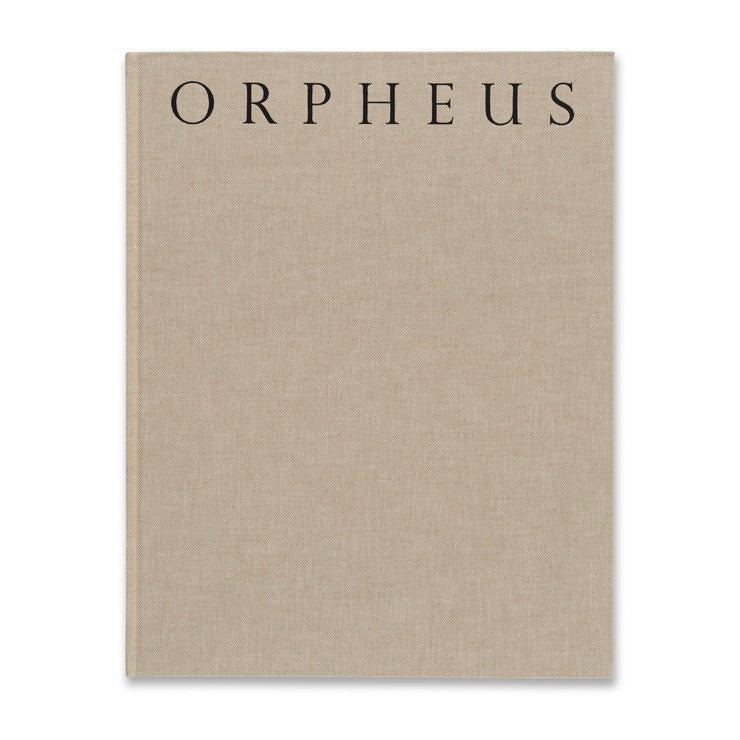
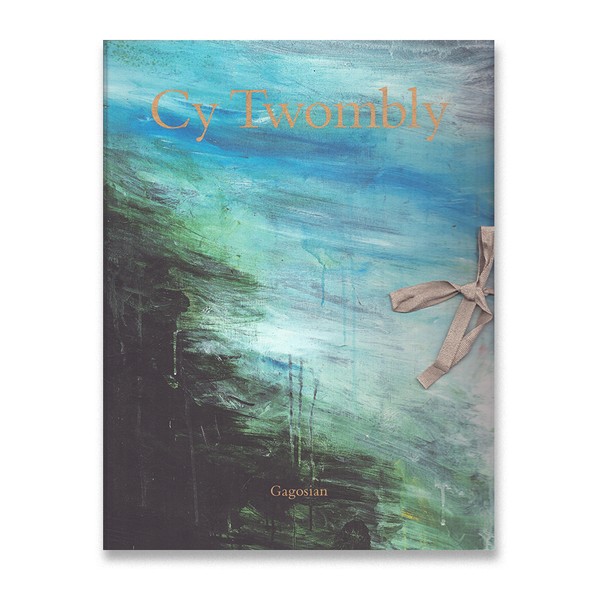
Published in 2017 on the occasion of the solo exhibition Cy Twombly. Orpheus at Gagosian Gallery, Paris. The exhibition catalogue presents, in this order: a selection of poems, excerpted from the “Sonnets to Orpheus” by Rainer Maria Rilke (German/English); Giorgio Agamben’s essay, “Falling Beauty” (Italian/English); a series of exhibition views; the complete illustrations and detailed pictures of the exhibited works, a group of drawings and paintings - dating between 1968 and 1979 - dedicated to the mythological figure of Orpheus; Gary D. Astrachan’s essay, “Orpheus, the Praise Singer”; and the list of the exhibited works.
The essay “Falling Beauty,” written by the philosopher Giorgio Agamben, reflects on the meaning of the philosophical and artistic bond between Cy Twombly’s sculpture, Untitled (1984), and the verses of Rainer Maria Rilke’s Tenth Duino Elegy, which are partially inscribed by the artist on the sculpture. Agamben lyrically describes Twombly’s interpretation of Rilke’s poetry thus: “Such is Twombly's gesture in these extreme sculptures, in which every ascent is reversed and suspended, almost a threshold or caesura between an action and a non-action: Falling beauty. It is the point of de-creation, when the artist in his supreme way no longer creates, but de-creates, the messianic moment which has no possible title and in which art miraculously stands still, almost thunderstruck, fallen and risen at every moment.”
Gary D. Astrachan, in his essay “Orpheus, the Praise Singer”, reflects on the mythological figure of Orpheus, “the image of the artist who ‘goes down’” through a palimpsest of literary, philosophical, and artistic references between Rilke’s collection of sonnets, Agamben’s “Falling Beauty”, and Twombly’s artistic gesture of “construction” and “de-construction” in his work. According to the author: “Appearing as he does in the work of Cy Twombly, Orpheus as the figure of the artist performs his own appearances and disappearances. As Rilke says: ‘He comes and goes.’ Through the metonymic power of his name alone, he enters the world through its enunciation. He appears in and through the word. He is the bringer of the word, the logos, the language, poetry, and rhythms of life. He is song as the bridge to other worlds.”
Researchers interested in exploring the theme of the Classical literature and mythology in Cy Twombly’s work may also consult the following volumes: Mary Jacobus’s Reading Cy Twombly: Poetry in Paint (2016); Dominique Baqué’s Sous le signe d’Apollon et de Dionysos (2016); Cy Twombly: Fifty Days at Iliam, edited by Carlos Basualdo, published by The Philadelphia Museum of Art in association with Yale University Press (2018); Cy Twombly. Treatise on the Veil 1970, published by The Menil Collection, Houston (2019); Gary D. Astrachan’s Naming the Gods: Cy Twombly's Passionate Poiesis (2019); Cy Twombly: Making Past Present, edited by Christine Kondoleon and Kate Nesin (2020); Thierry Greub's Inscriptions (2022).
Published on the occasion of the exhibition Cy Twombly. Orpheus at Gagosian Gallery in Paris (December 1, 2016 – April 22, 2017).
Cy Twombly. Orpheus. Texts by Giorgio Agamben, Gary D. Astrachan. Paris: Gagosian Gallery, 2017. English/Italian edition.