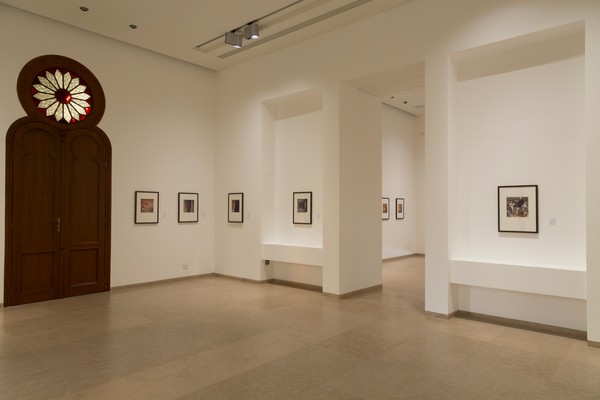
Cy Twombly.
In Beauty it is Finished.
Drawings 1951–2008
March 8 – April 25, 2018
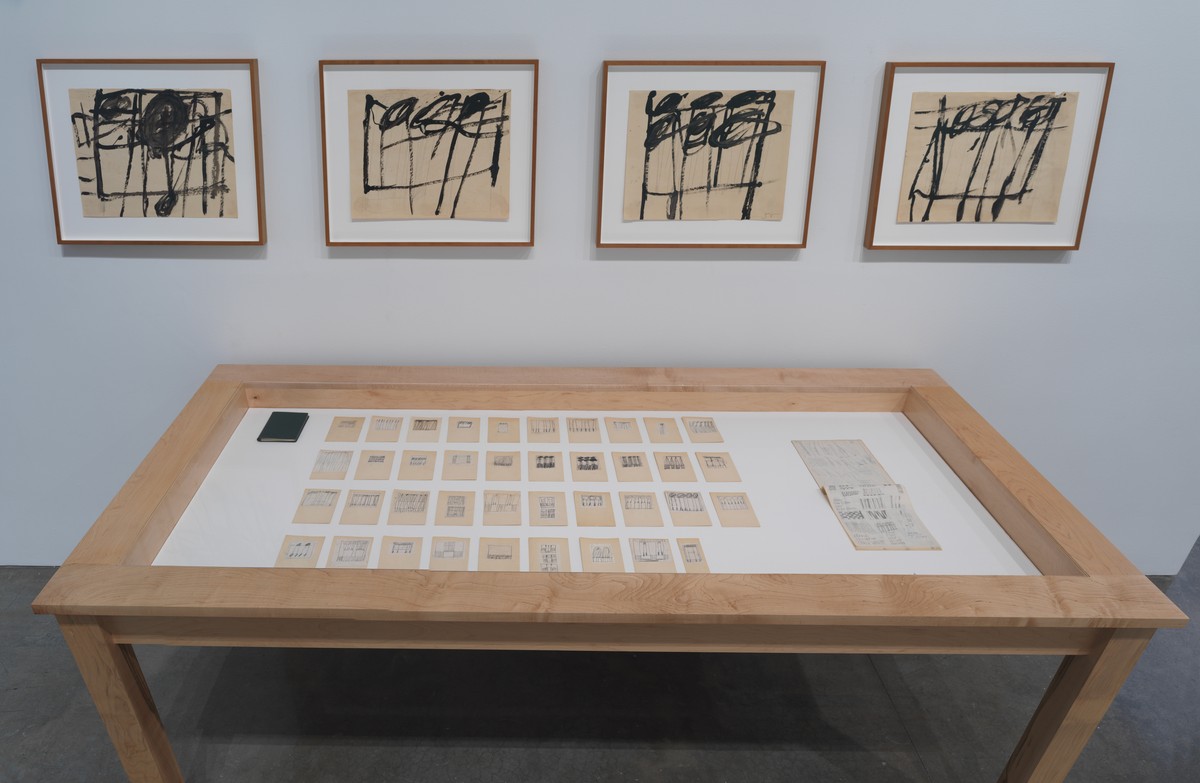
Installation view Gagosian Gallery, New York
Artwork: © Cy Twombly Foundation
Courtesy Gagosian Gallery. Photo: Robert McKeever
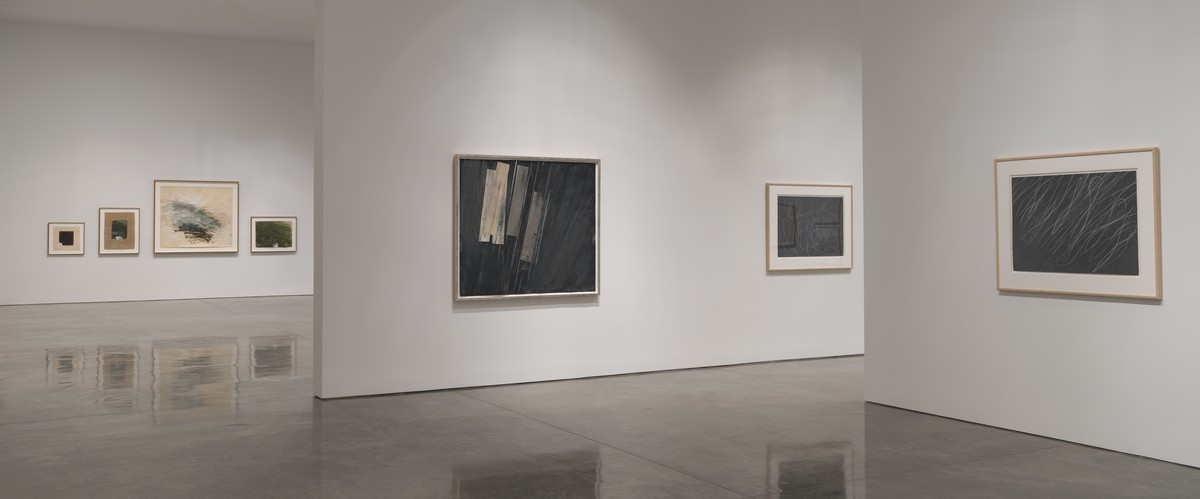
Installation view Gagosian Gallery, New York
Artwork: © Cy Twombly Foundation
Courtesy Gagosian Gallery. Photo: Robert McKeever
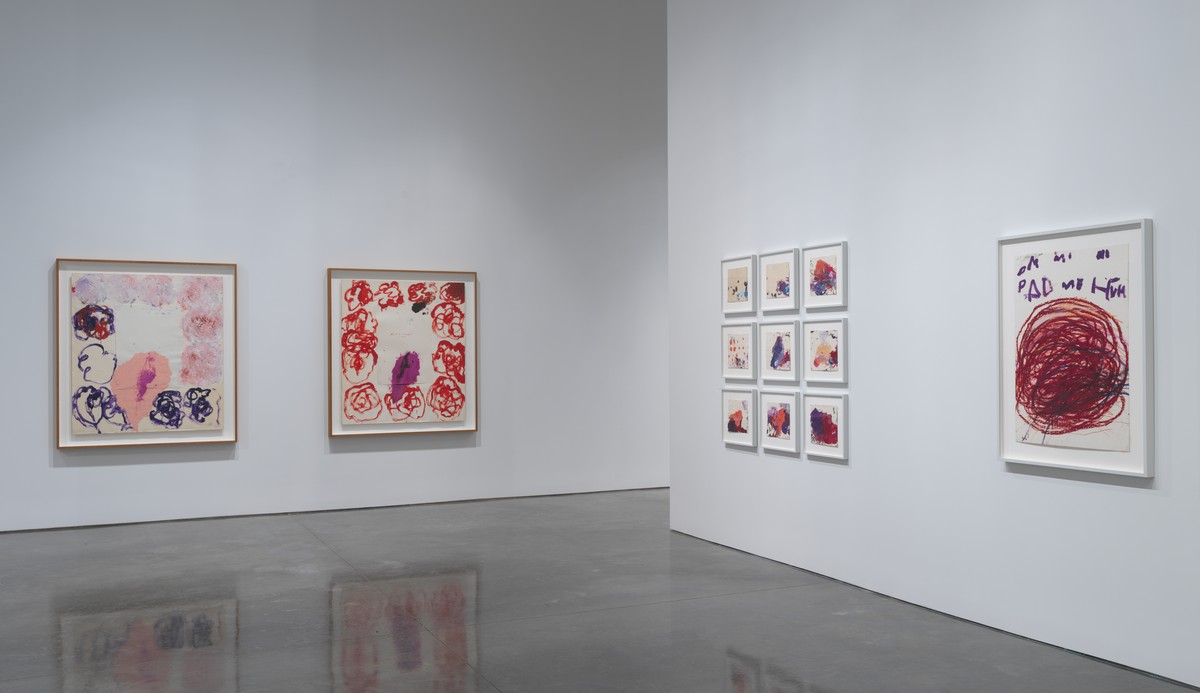
Installation view Gagosian Gallery, New York
Artwork: © Cy Twombly Foundation
Courtesy Gagosian Gallery. Photo: Robert McKeever
Curated by Mark Francis with Nicola Del Roscio and organized in association with the Cy Twombly Foundation, In Beauty It Is Finished: Drawings 1951–2008 presented over ninety drawings, collages, and works on paper at Gagosian's West 21st Street gallery. The first exhibition to survey Twombly's engagement with works on paper across his entire career, it marked the publication of the eighth and final volume of the Catalogue Raisonné of Drawings—edited by Del Roscio and published by Schirmer/Mosel, with the first volume having appeared in 2011. The show ran through April 25, what would have been Twombly's ninetieth birthday, and coincided with the presentation of his ten-part painting Coronation of Sesostris (2000) at Gagosian's 980 Madison Avenue gallery.
Drawing was not a secondary or preparatory activity for Twombly but a practice sustained in parallel with the paintings, sculptures, and photographs throughout his career. The exhibition traced this continuity in roughly chronological sequence, from the earliest works on paper through the final works completed before his death in 2011.
The show opened with a group of small works from 1951, several of them exhibited publicly for the first time. Through the mid-1950s, marks gathered in dense passages, scattered into near-illegibility, or charged across the sheet with energy and tension. Twombly was a contemporary of Robert Rauschenberg and Jasper Johns, but his work took a different course: while prevailing movements of the period sought, as the press release put it, to "abandon historical narratives altogether," Twombly, who began spending time in Europe during these years, "directed his focus to classical, modern, and ancient poetic traditions." After he moved permanently to Italy in the late 1950s, this orientation became central to the work. The press release describes Ode to Psyche (1960) as a "colorful, diagrammatic" work "featuring erotic allusions and jokes while maintaining an abstract charge." Through the 1960s, sensuousness and color run through the drawings before the palette contracts into the so-called "blackboard" series—surfaces of wet gray paint over which Twombly drew in white wax crayon, producing spirals, loops, and cascading marks.
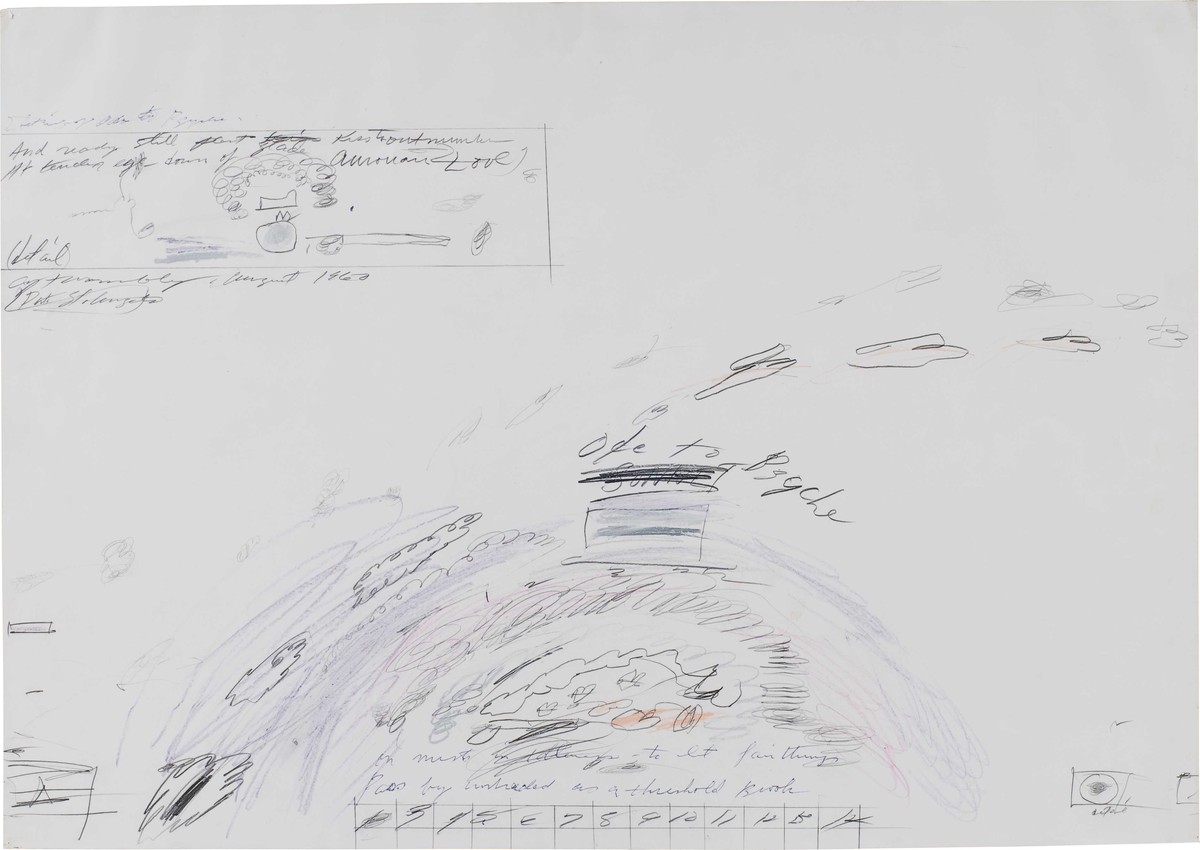
Cy Twombly, Ode to Psyche, 1960
© Cy Twombly Foundation
Later works drawn from Twombly's time in Gaeta, where he maintained his Italian studio, and Lexington, Virginia, his birthplace, bring places and natural forms more prominently into the drawings, collages, and watercolors. The final section presented works that had remained in Twombly's studio at his death and were on view for the first time. Made with oil stick and wax crayon, they reflect what Twombly described as his "irresponsibility to gravity." The title was drawn from a Navajo night chant, which Twombly also wove into Untitled (In Beauty It Is Finished) (1983–2002), an unbound book of thirty-four handmade pages bearing smears of red, orange, and blue, flowerlike markings, the chant's own text, and a haiku by Tan Taigi (1709–1771).
Gagosian published a catalogue to accompany the exhibition. It features the essay by David Anfam.
For further information:
Gagosian, New York
gagosian.com