Cy Twombly
January 23 – March 22, 2025
Installation view Gagosian Gallery, New York
Artwork: © Cy Twombly Foundation
Courtesy Gagosian Gallery. Photo: Maris Hutchinson
Installation view Gagosian Gallery, New York
Artwork: © Cy Twombly Foundation
Courtesy Gagosian Gallery. Photo: Maris Hutchinson
Installation view Gagosian Gallery, New York
Artwork: © Cy Twombly Foundation
Courtesy Gagosian Gallery. Photo: Maris Hutchinson
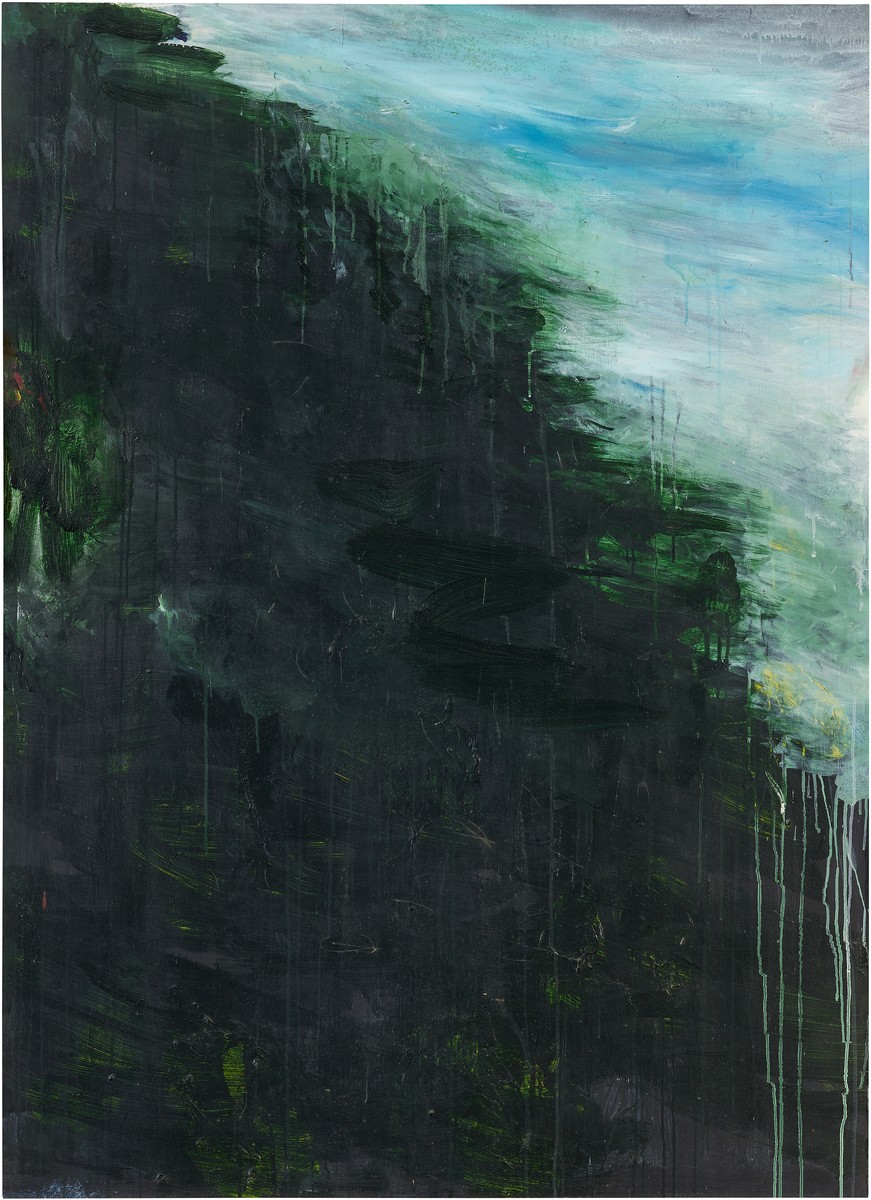
Cy Twombly, Paesaggio, 1986
Courtesy Gagosian Gallery. Photo: Peter Schälchli
© Cy Twombly Foundation
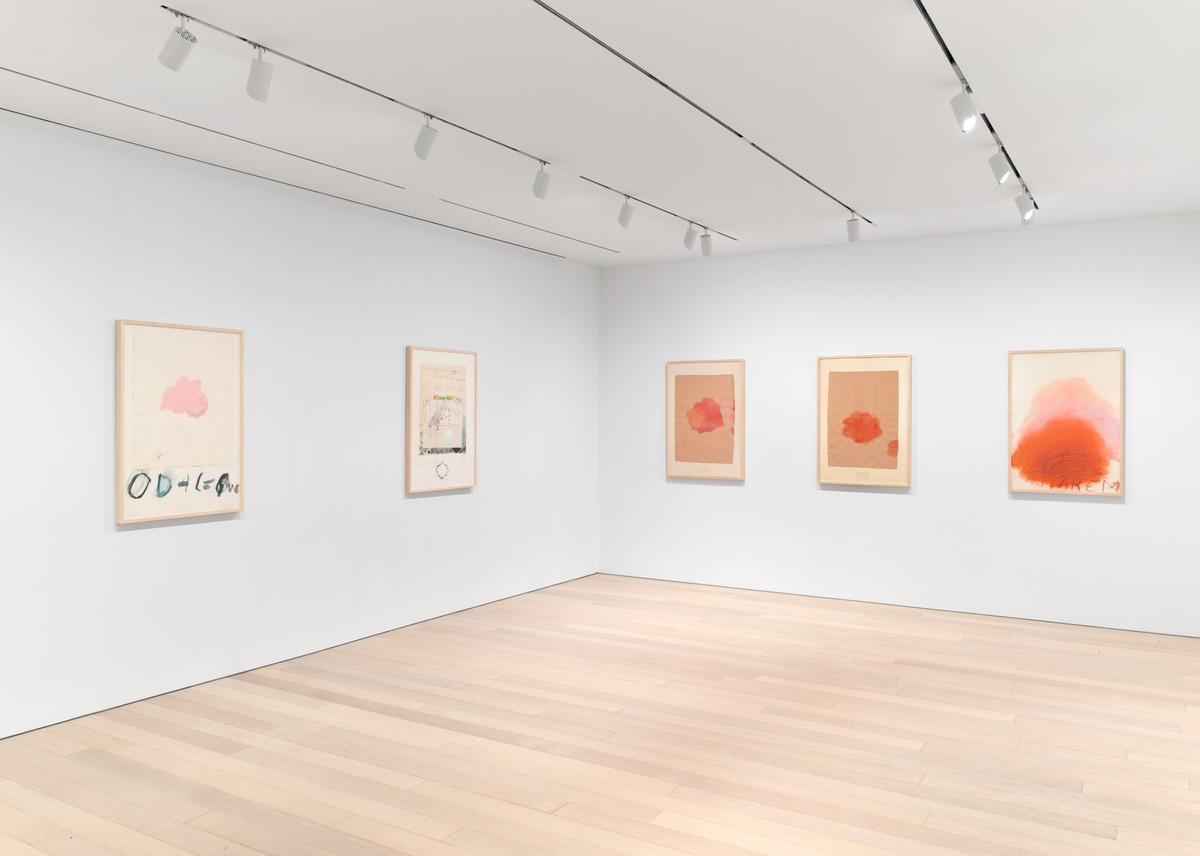
Installation view Gagosian Gallery, New York
Artwork: © Cy Twombly Foundation
Courtesy Gagosian Gallery. Photo: Owen Conway
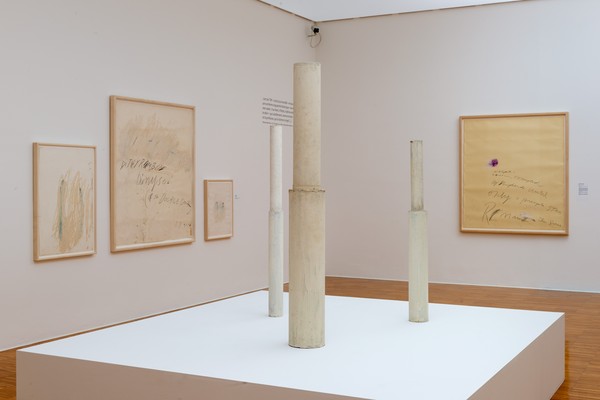
The exhibition that opened at Gagosian’s Madison Avenue galleries in January 2025 assembled paintings, a sculpture, and works on paper spanning more than two decades of Cy Twombly’s practice. Installed across two floors, it traced the artist’s movements between austerity and abundance, history and landscape, word and image. Together, the works outlined a series of shifts in mood and register, each phase carrying forward a vocabulary of marks at once deeply personal and profoundly historical.
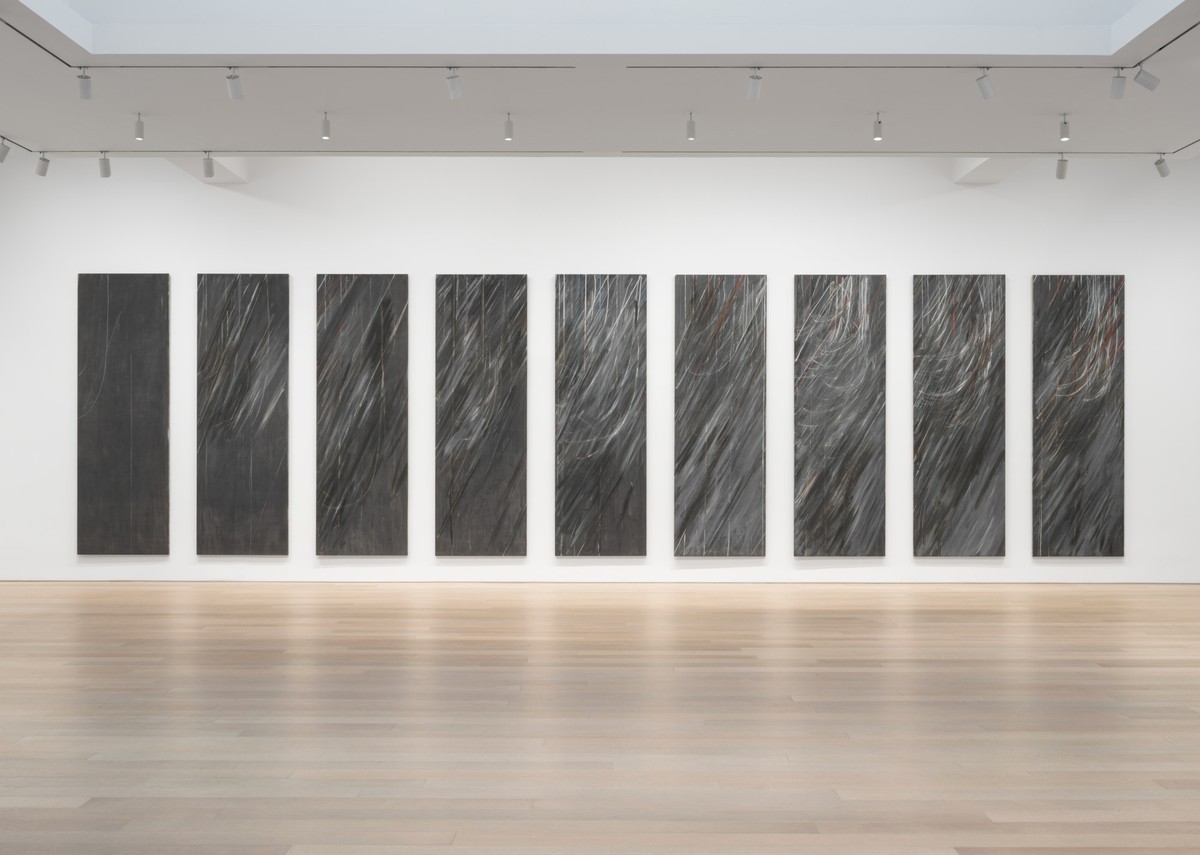
On the sixth floor, visitors encountered a group of rare blackboard paintings, some on view for the first time. Made between 1968 and 1971, they stretch the act of writing across the field of painting, their looping scripts and diagonal currents hovering between diagram and incantation. At once rigorous and volatile, these works unfolded in the wake of Minimalism and Conceptual art, yet they resisted the clarity those movements pursued. Numbers, repetitions, and scrawled inscriptions recall the classroom, but equally the turbulence of Leonardo’s late drawings of floods and storms. What emerges is a surface where the familiar boundaries between painting, drawing, and writing dissolve into flux.
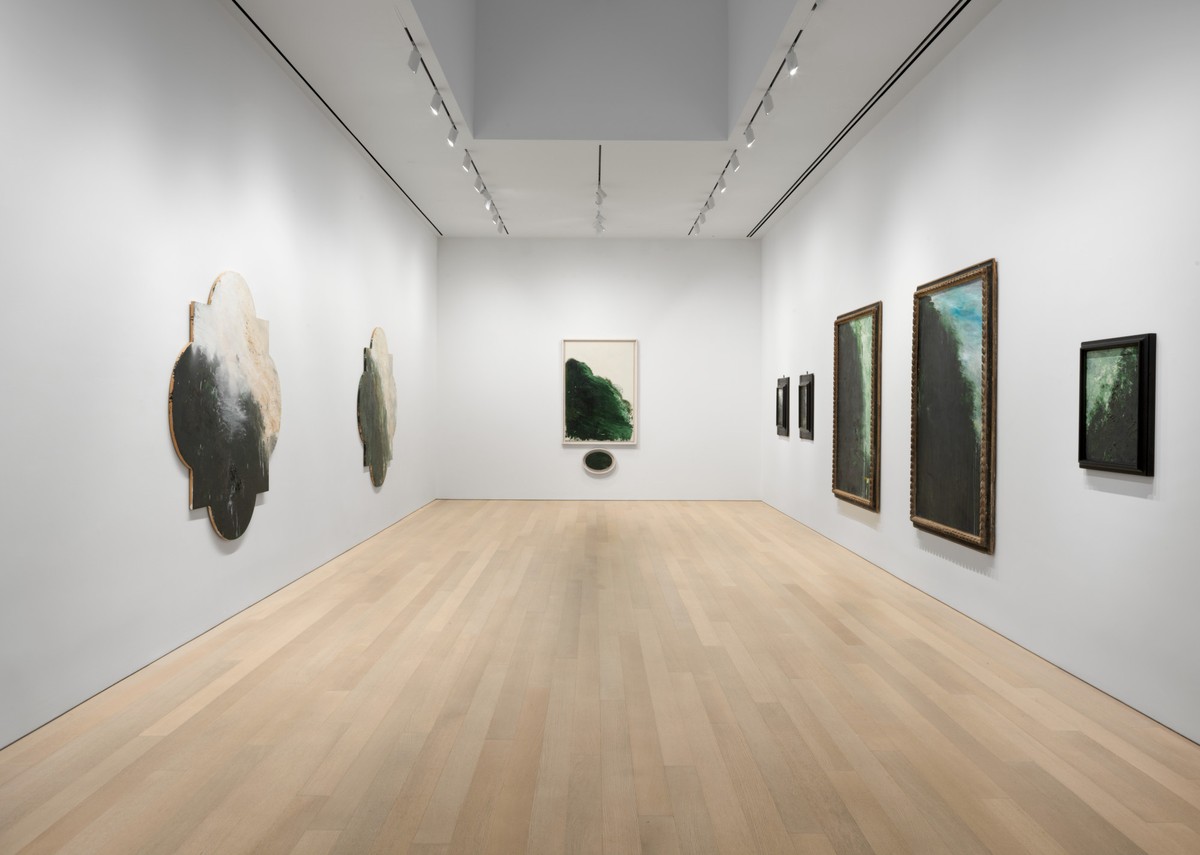
The fifth floor shifted into an entirely different key, surrounded by the verdant paintings Twombly created in Bassano in Teverina during the 1980s, suffused with color and atmosphere. Layers of green spread into aqueous veils, as if air, water, and earth were caught in perpetual transformation. Their quatrefoil panels and Rococo echoes suggest history, yet their fluid surfaces lean toward metamorphosis rather than recollection.
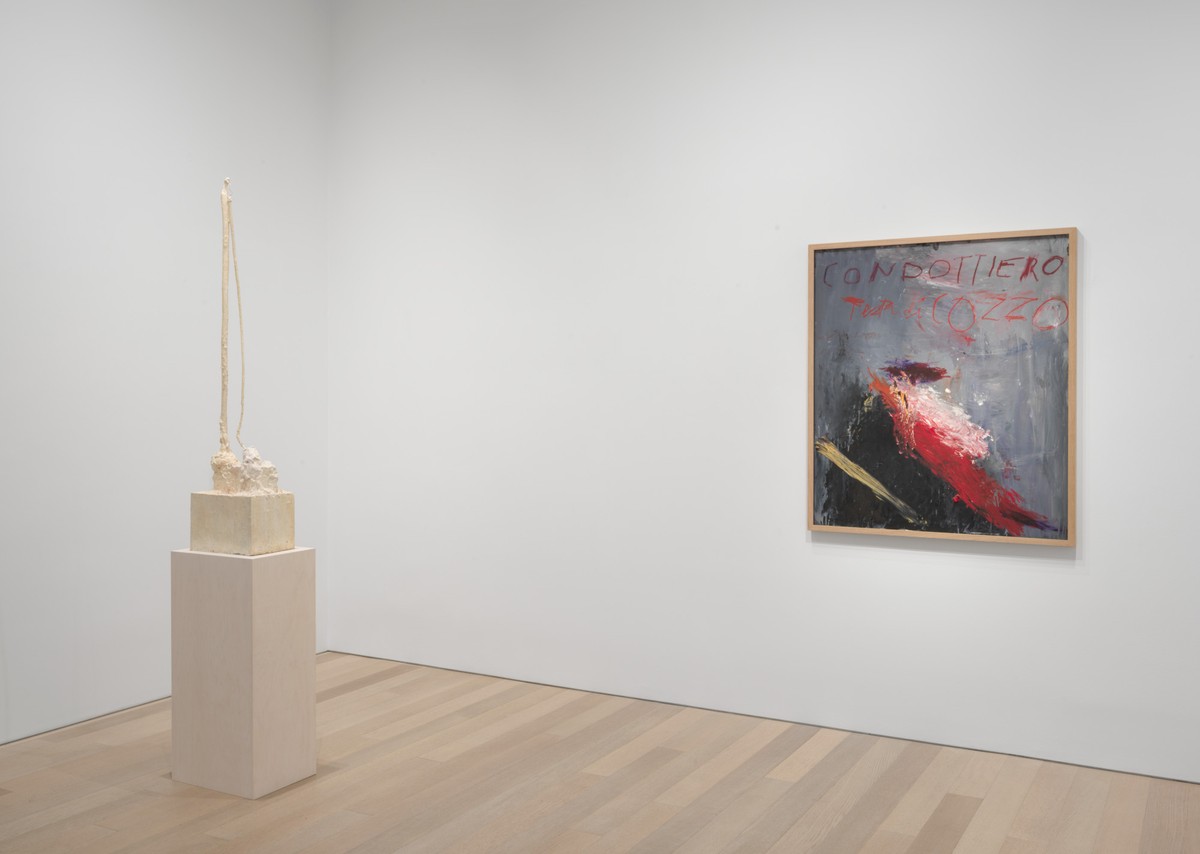
Also on the 5th floor, Twombly’s Condottiero Testa di Cozzo (1987) transposed Titian’s portrait of the Duke of Alba into passages of paint that vibrate between homage and reinvention. The floral canvases of the Souvenir of D’Arros series (1990) carried a similar energy, forms through which memory and decay were held in suspension. Throughout, Twombly’s hand suggests that history, like nature, can be grasped only provisionally, always shifting beneath the weight of paint.
The exhibition also reunited Five Day Wait at Jiayuguan (1980), a suite of works on paper shown together for the first time since the Venice Biennale in 1981. Made in Rome after travels through Russia, Afghanistan, and Central Asia, the drawings bear the imprint of distance and desert: gestural forms interlaced with fragments of text, a sparse evocation of the edge of the Gobi. They remind us that Twombly’s abstractions were never sealed off from the world. His inscriptions carry the force of memory and geography, the written word pressed into dialogue with lived experience.
Taken as a whole, the exhibition underscored Twombly’s refusal of categories. The blackboards shift between script and image; the Bassano paintings hover between landscape and abstraction; the Venetian suite straddle travelogue and poem. Even the sculpture included here spoke of this condition, its whitewashed assemblage poised between solidity and gesture, monument and fragment. Across decades and across mediums, he worked not toward closure but toward the persistence of possibility. His canvases and drawings, like his sculptures, remain open fields—provisional, unstable, unfinished—in which memory, history, and inscription can never be fully fixed.
Installation video
Artwork: © Cy Twombly Foundation
Courtesy Gagosian Gallery. Video: Pushpin Films
The exhibition also reunited Five Day Wait at Jiayuguan (1980), a suite of works on paper shown together for the first time since the Venice Biennale in 1981. Made in Rome after travels through Russia, Afghanistan, and Central Asia, the drawings bear the imprint of distance and desert: gestural forms interlaced with fragments of text, a sparse evocation of the edge of the Gobi. They remind us that Twombly’s abstractions were never sealed off from the world. His inscriptions carry the force of memory and geography, the written word pressed into dialogue with lived experience.
Taken as a whole, the exhibition underscored Twombly’s refusal of categories. The blackboards shift between script and image; the Bassano paintings hover between landscape and abstraction; the Venetian suite straddle travelogue and poem. Even the sculpture included here spoke of this condition, its whitewashed assemblage poised between solidity and gesture, monument and fragment. Across decades and across mediums, he worked not toward closure but toward the persistence of possibility. His canvases and drawings, like his sculptures, remain open fields — provisional, unstable, unfinished — in which memory, history, and inscription can never be fully fixed.
Gagosian published a catalogue to accompany the exhibition. It features the essays by Suzanne Hudson and Jenny Saville.
For further information:
Gagosian, 980 Madison Ave., New York
gagosian.com