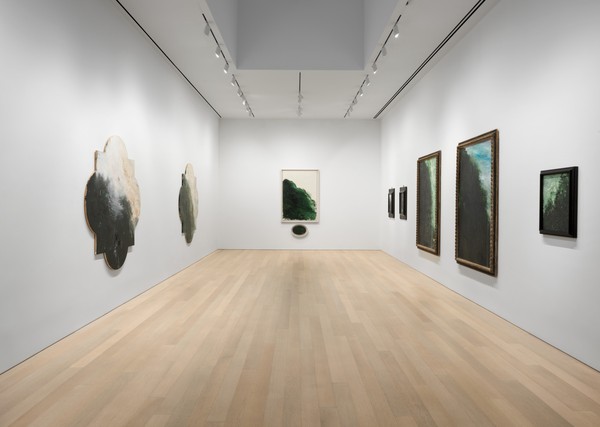
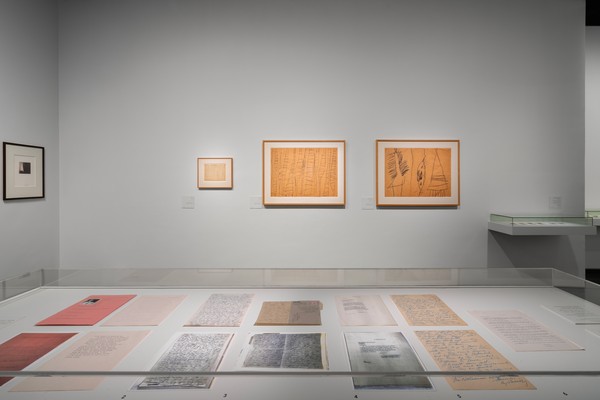
Cy Twombly.
Œuvre sur papier (1973–1977)
June 3 – September 24, 2023
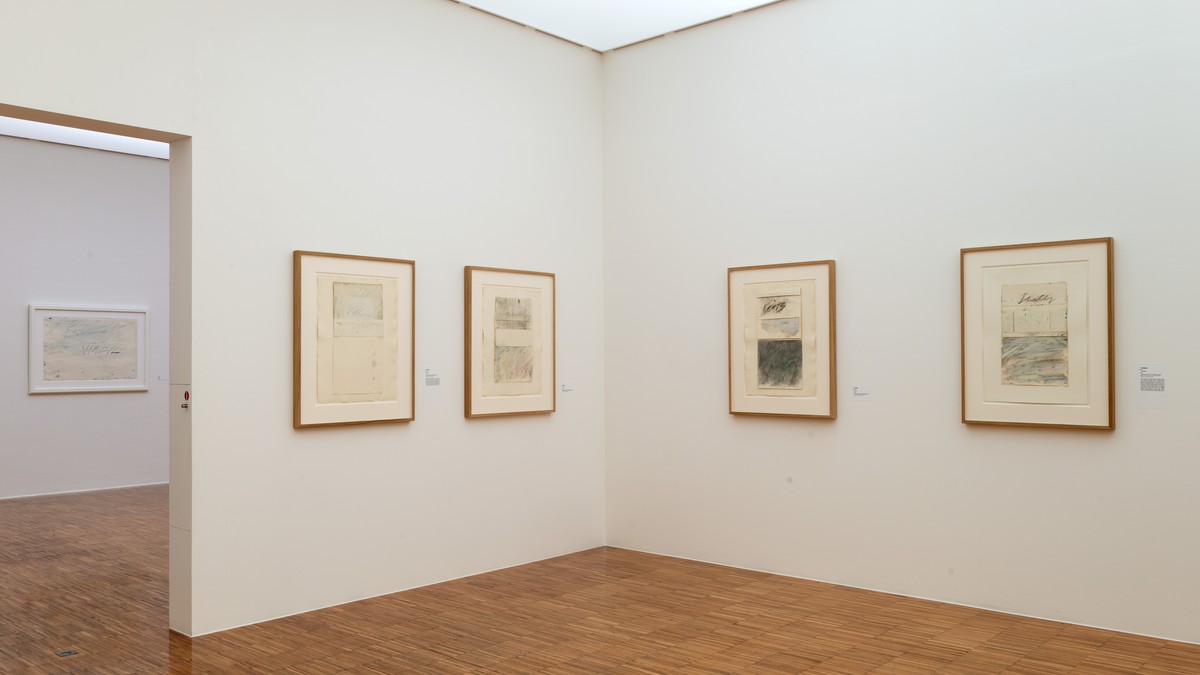
Installation view Musée de Grenoble, Grenoble
Artwork: © Cy Twombly Foundation
Courtesy Musée de Grenoble. Photo: Jean-Luc Lacroix
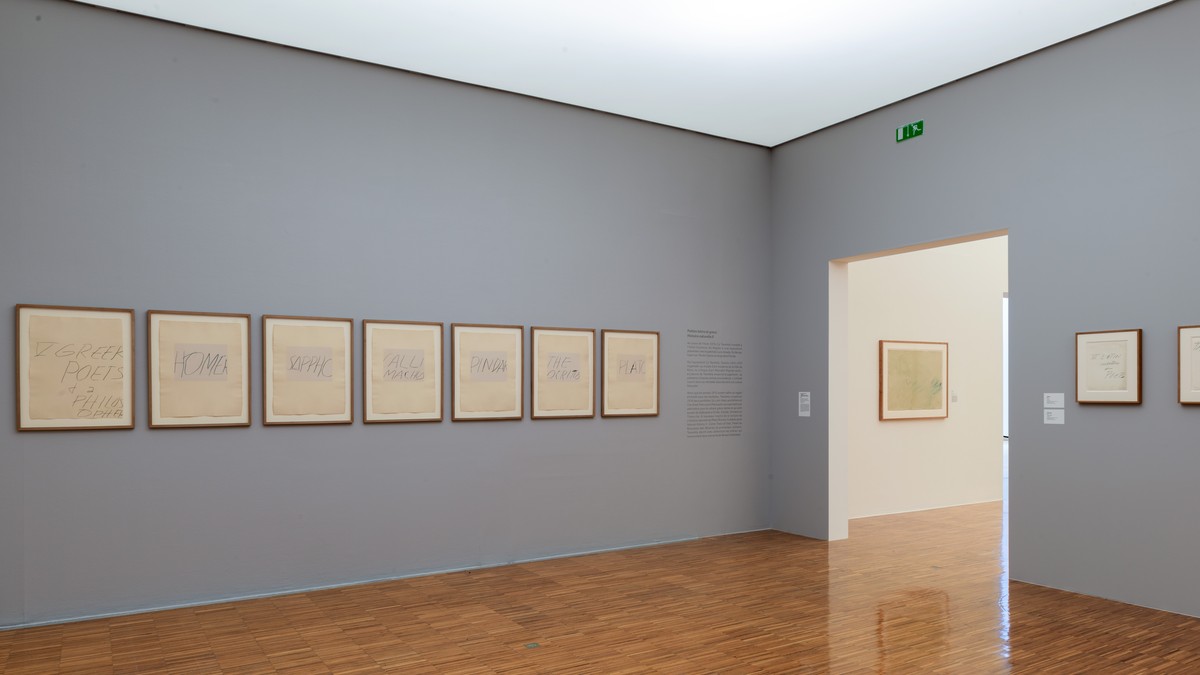
Installation view Musée de Grenoble, Grenoble
Artwork: © Cy Twombly Foundation
Courtesy Musée de Grenoble. Photo: Jean-Luc Lacroix
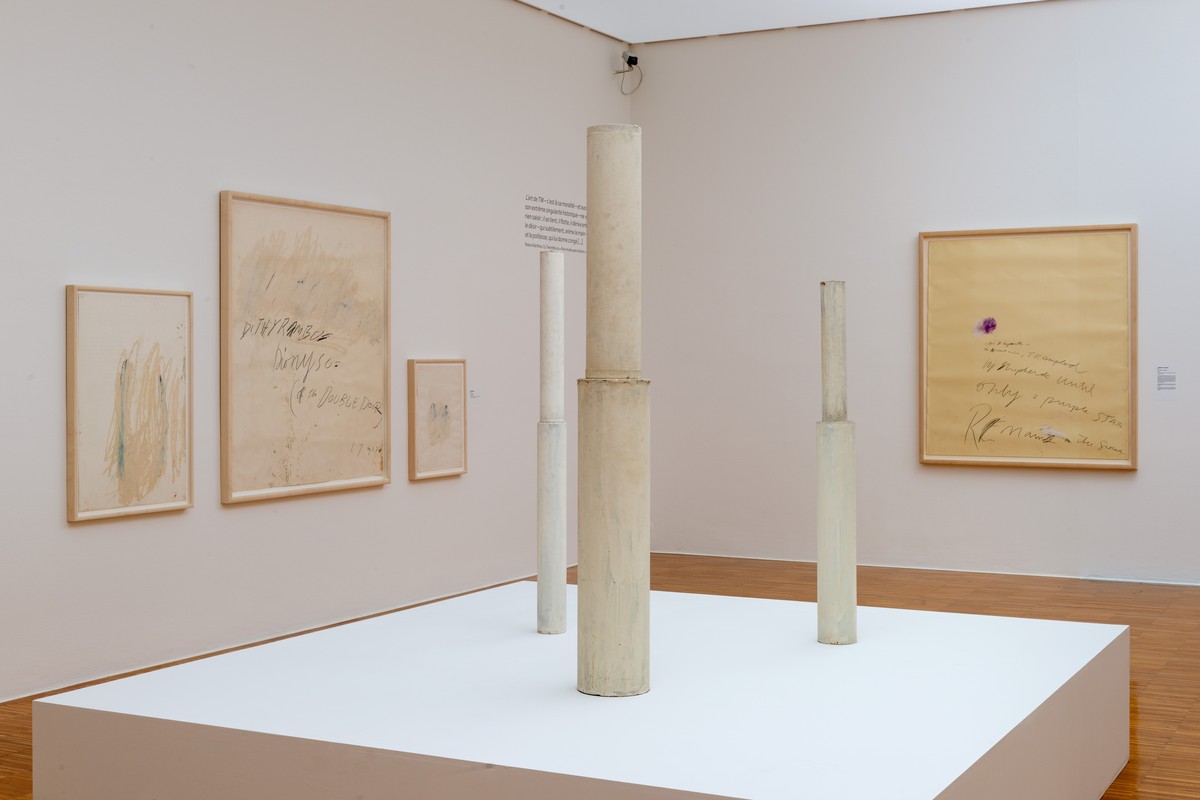
Installation view Musée de Grenoble, Grenoble
Artwork: © Cy Twombly Foundation
Courtesy Musée de Grenoble. Photo: Jean-Luc Lacroix
The Musée de Grenoble presented Cy Twombly: Œuvres sur papier, 1973–1977 from June to September 2023. Curated by Jonas Storsve and organized in partnership with the Cy Twombly Foundation, it was the first exhibition in France to focus on a tightly delimited period of the artist’s career. More than one hundred drawings, collages, and prints were gathered from the Foundation and from private and public collections across Europe, many of them little known or never previously exhibited.
The years 1973 to 1977 marked a decisive shift in Twombly’s work. After the sustained production of the blackboard paintings of the late 1960s, he produced only eight paintings across this entire four-year span. His energies instead turned almost exclusively to works on paper. The resulting body of drawings and collages did not serve as preparatory sketches but as autonomous experiments in mark, inscription, and form. They constituted a laboratory in which Twombly tested ideas that would culminate in Fifty Days at Iliam (1978), the ten-part cycle now in the Philadelphia Museum of Art.
Jonas Storsve emphasized that poetry, Greco-Roman mythology, and nature remained Twombly’s key sources of inspiration. This is evident in Natural History. Part II—Some Trees of Italy (1976), where botanical imagery is rendered through fragile lines and stains, and in The Shepheardes Calender (1977), a series that folded pastoral references into fields of scrawl and erasure. Storsve underscored how these works sustained Twombly’s dialogue with antiquity while extending his exploration of gesture and writing.
Guy Tosatto, director of the Musée de Grenoble, located the roots of Twombly’s drawing practice in an earlier discipline: his habit of drawing in the dark during military service in 1953. That exercise in relinquishing control shaped his lifelong engagement with white space, hesitation, and the energy of the line. For Tosatto, the works on paper of the 1970s embodied drawing as an act of invocation rather than illustration, summoning fragments of myth, history, and language without fixing them in place.
Drawing on Mallarmé, Barthes, and Aby Warburg, Sophie Bernard describes these drawings in her catalog essay as part of Twombly’s “humanist encyclopedia.” She emphasizes their cartographic quality — maps of thought rather than of territory — and their openness to utopian speculation.
The exhibition also recalled how the 1970s were a decade of growing recognition for Twombly’s drawings. In 1973, the Kunstmuseum Basel mounted a survey of 114 works on paper, followed later that year by a monograph from Propyläen Verlag. In 1976, Suzanne Pagé organized an exhibition of more than ninety drawings at the ARC, Musée d’Art Moderne de la Ville de Paris. These projects established drawing as central to Twombly’s reputation and underscored the significance of the works now brought together in Grenoble.
Interview with Jonas Storsve, curator of the exhibition
Courtesy Judith Benhamou
The museum published a catalogue to accompany the exhibition, edited by Jonas Storsve, Guy Tosatto, and Sophie Bernard. It features the essays by Sophie Bernard, Peter Laugesen, Jonas Storsve, and Guy Tosatto.
For more information:
Musée de Grenoble
museedegrenoble.fr